ALL LABS
Thermodynamics Lab
State-of-the-art testing rigs and apparatus designed for thermal engineering research and academic excellence.
12 EQUIPMENT

Single Cylinder 4-Stroke Diesel Engine Test Rig
Equipped with an Eddy Current Dynamometer for precise load control. Students perform performance analysis, determining brake power, thermal efficiency, and specific fuel consumption. The rig facilitates heat balance sheet preparation and P-theta diagram study for combustion analysis.
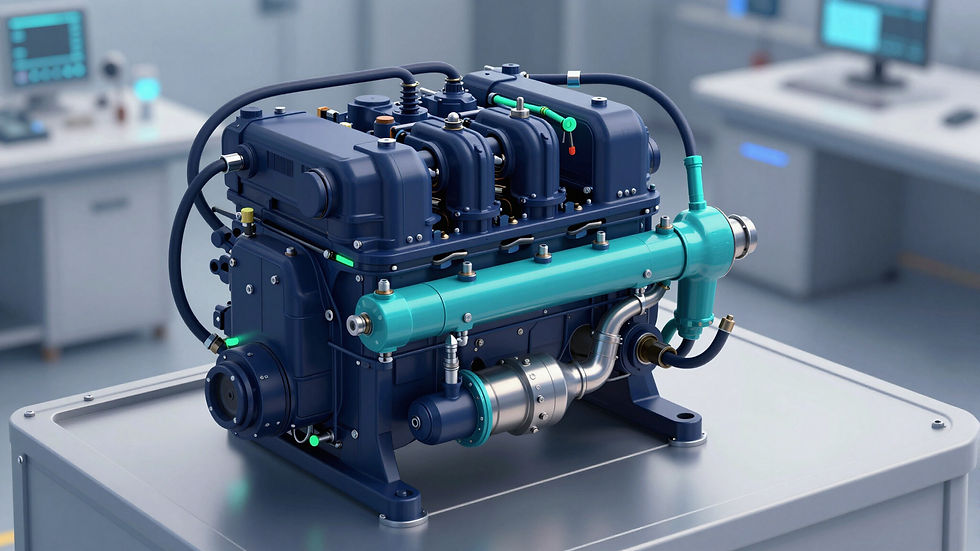
Single Cylinder 4-Stroke Petrol Engine Test Rig
Designed for variable speed tests to study the performance characteristics of spark-ignition engines. Key measurements include torque, fuel flow rate, and exhaust temperature. It allows for the investigation of air-fuel ratio effects on engine efficiency and power output.

Two-Stage Air Compressor Test Rig
Features intercooling between stages to demonstrate work saving in multi-stage compression. Measurements of pressure, temperature, and airflow enable the calculation of volumetric efficiency and isothermal efficiency. Students analyze the impact of pressure ratios on compressor performance.
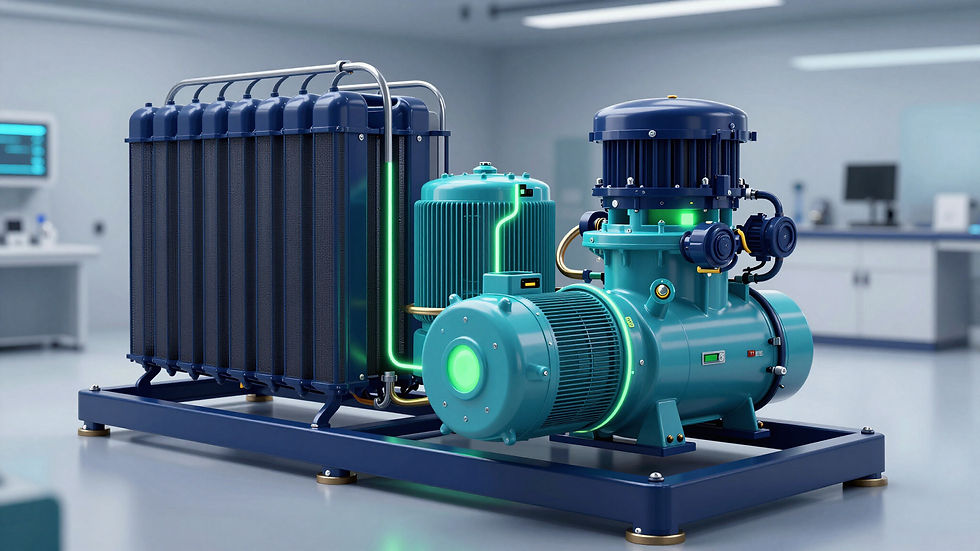
Refrigeration Test Rig (Vapour Compression)
A comprehensive setup for studying the vapour compression refrigeration cycle. It includes pressure gauges and temperature sensors at every stage for COP calculation. Users can investigate the effects of sub-cooling and superheating on system performance.

Air Conditioning Test Rig
Demonstrates psychrometric processes including heating, cooling, humidification, and dehumidification. Key outcomes include calculating the bypass factor of coils and sensible heat factor. It provides hands-on experience in thermal comfort and HVAC system analysis.

Parallel & Counter Flow Heat Exchanger Apparatus
Allows for a direct comparison between parallel and counter-flow configurations in a concentric pipe setup. Students measure inlet and outlet temperatures to calculate Log Mean Temperature Difference (LMTD) and overall heat transfer coefficients. It validates theoretical heat exchange principles.

Shell & Tube Heat Exchanger Apparatus
An industrial-scale model used to study multi-pass heat transfer between two fluids. Key measurements involve pressure drops and temperature gradients across the shell and tubes. Students evaluate the effectiveness-NTU method for heat exchanger design and performance.

Boiling Heat Transfer Apparatus
Study the various regimes of pool boiling, from nucleate to film boiling, using a heated wire element. It allows for the determination of critical heat flux and the visualization of bubble formation. Essential for understanding phase-change heat transfer in steam generation.

Condensation Heat Transfer Apparatus
Designed to differentiate between drop-wise and film-wise condensation on horizontal and vertical surfaces. Precise temperature monitoring helps calculate heat transfer coefficients for both modes. It highlights the superior efficiency of drop-wise condensation in industrial condensers.

Pin-Fin Apparatus
Investigates heat transfer through extended surfaces under both natural and forced convection modes. Measurements along the fin length allow students to verify the temperature distribution profile and calculate fin efficiency and effectiveness. It is critical for electronic cooling studies.

Forced & Natural Convection Apparatus
Features vertical and horizontal pipes to compare convective heat transfer coefficients. By controlling airflow velocity, students study the transition from free to forced convection regimes. It verifies empirical correlations like Nusselt, Grashof, and Reynolds numbers.

Bomb Calorimeter
A precision instrument for determining the high calorific value (HCV) of solid and liquid fuels. Students measure the temperature rise of water following controlled combustion in a pressurized oxygen bomb. It is fundamental for fuel property analysis and thermochemistry.